Slotbound Nudge and Re-Spin: When to Pay for a Better Board
Slotbound nudge and re-spin economics: what each costs, when a nudge completes a line, when a bought spin is cheaper than a bad board, and when to walk away.
A nudge shifts the board one step and is best spent finishing a line that is already two-thirds complete. A re-spin replaces the board and is worth it when the current board has no live pairs at all. Both show their price in the machine header, and the rule is simple: never pay more for a board fix than the unit it produces is worth.
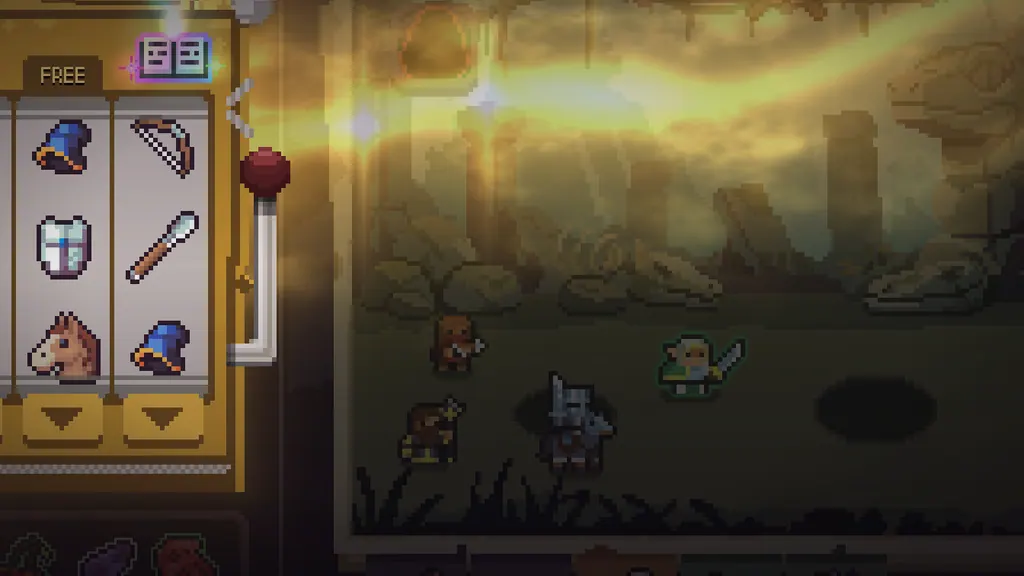
Slotbound gives you two ways to correct a bad spin, and neither is free. The machine header shows a small counter for the free ones and a gold figure for the paid ones, and the decision of when to spend either is the difference between a run that keeps summoning and one that burns its economy on bad boards. Both tools exist to chase the line patterns described in the payout guide→.
What a nudge actually does
A nudge moves the board by one step, which is why the achievement list treats it as a line-finishing tool rather than a lottery ticket. God of Nudges asks for three or more winning lines from a single nudge, which means a good nudge can turn one completed line into three.
The three cases where a nudge is worth it:
| Board state | Nudge? | Why |
|---|---|---|
| Two lines need the same symbol | Yes | One nudge completes both, the best possible rate |
| One line needs a symbol, and a second line is one step away | Yes | Two lines from one input is still above rate |
| A column has two matching symbols and a third that would match with a shift | Yes | You are buying a future spin, not just this one |
| No pair anywhere on the board | No | A nudge on a dead board is a coin flip with a price |
| Only a diagonal is close | Rarely | Diagonals cannot be nudged as reliably as rows |
The reason rows are highlighted is mechanical: a nudge moves a whole reel, so every row sharing that reel shifts together. A board with pairs in two rows that share a column is a nudge waiting to happen.
What a re-spin actually costs
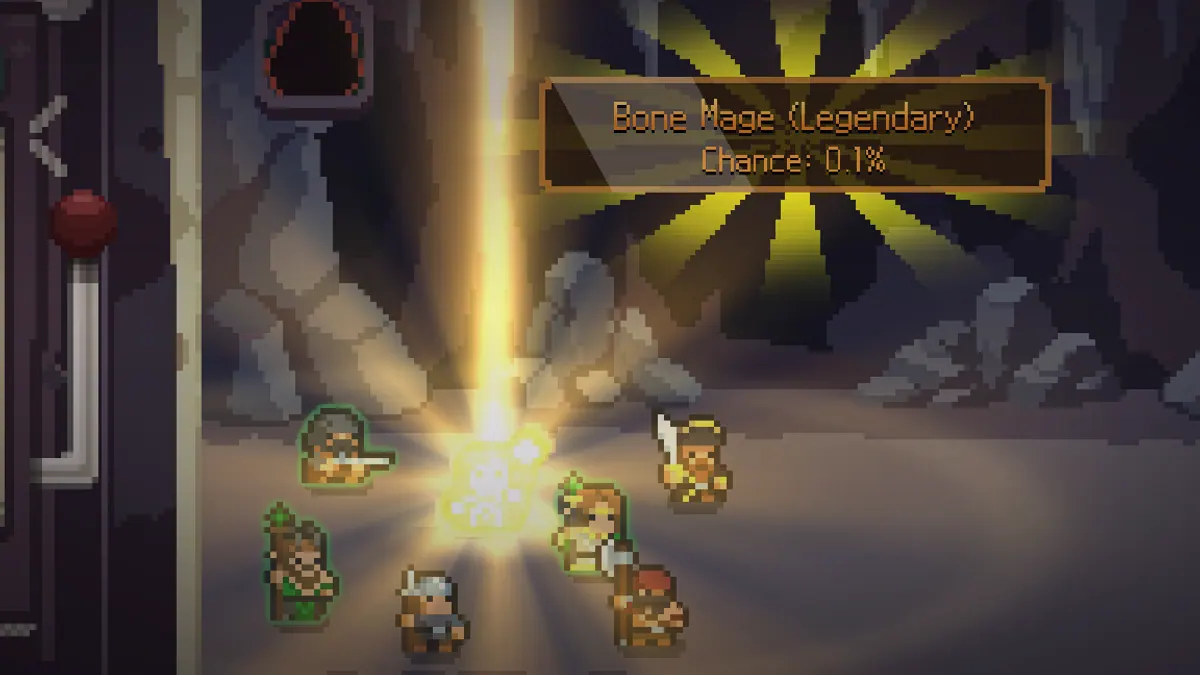
A re-spin throws the board away and deals a new one. The header price in the screenshots reads 200 gold in one battlefield and 250 in another, which tells you the cost scales with the stage rather than staying fixed. What you are buying is variance, not a specific result.
Pay for a re-spin when:
- The board is dead. No pair in any row or column, and the current wave is a judgment wave. A dead board means the next spin produces nothing useful.
- You need a specific class. If your carry is a mage and your front line is gone, a board with no staffs is a wasted spin regardless of how many bows line up.
- The wave block leaves you no time. A re-spin is instant; a normal spin needs you to survive the wave first.
Do not pay for a re-spin when the board already has two live pairs. You are not improving on three chances, you are paying to replace them.
The comparison that settles most arguments
Every purchase in Slotbound competes with every other purchase, and the spin economy gives you an unusual advantage: the machine tells you the price of a unit.
Ask one question before spending gold on anything: does this gold buy more army than a bought spin, or less?
- A bought spin produces at least one unit, and often several. It also produces absorb material.
- An upgrade node produces a permanent stat change, but it needs waves to pay off.
- An item produces an immediate effect, which is worth it exactly when the effect prevents a lost life.
Early in a run, spins win that comparison because the army is the bottleneck. Late in a run, when your cap is full and your carry is fed, upgrades win because a spin produces fodder you cannot use. The turn happens around the point where your army counter stays full between waves.
Nudges versus re-spins versus blasts
Three tools, three different jobs:
| Tool | Changes | Best use | Worst use |
|---|---|---|---|
| Nudge | Shifts the board one step | Finish pairs you already have | Chasing a symbol with no partner |
| Re-spin | Replaces the board | Killing a dead board | Replacing a board with live pairs |
| Blast | Removes symbols | Manufacturing a multi-line board | Clearing clutter at random |
Perfect Demolition, the achievement for removing six or more symbols with a single blast, sits at 7.3 percent, which is a reminder that blasts are a precision tool. Used on a board with two pairs, a blast can turn a two-line spin into a four-line spin. Used on a random board, it just removes symbols.
When to stop fixing boards
There is a point in every run where the board stops being the bottleneck. You will know it by three signs:
- Your army counter sits at the cap. Extra summons become food, not power.
- Your carry is three stars. The next absorb threshold is far away, so material has diminishing value.
- A judgment wave is one spin away. Gold spent on the board now is gold not spent on the upgrade that survives the wave.
At that point, bank the gold and spend it on the upgrade tree. Spending on boards past your cap is the same mistake as hoarding gold at wave 3, just in reverse.
Sources
Official source: Slotbound on Steam ↗
- Steam store page ↗ for the machine, jackpot and odds manipulation wording.
- Steam achievement stats ↗ for God of Nudges, Four Lines and Perfect Demolition rates.
- Steam news hub ↗ for changes to the spin loop and controls across 0.2.0 to 1.0.
FAQ
Do nudges refill between waves?
The machine header counter shows how many free board fixes you hold, and the counter changes as the run goes on. Cores and upgrades can add or restore them, which is why economy cores are valued above damage cores early.
Is a re-spin always better than a nudge?
No. A re-spin replaces information, a nudge uses it. When the board already shows two pairs, a nudge converts known value into a line, while a re-spin throws that value away.
Can I nudge after the wave starts?
Preparation is untimed and the board is a preparation tool, so do board work before you commit the wave. Once enemies spawn your attention belongs on placement, not on the machine.
Do bought spins count toward achievements?
Line-based achievements such as Four Lines and Baby Boomer count results, not sources. A bought spin that produces four lines counts exactly like a free one, which is another reason to price spins against upgrades.